Tuscany vs. Umbria: Which Italy Countryside Region Is Right for You?
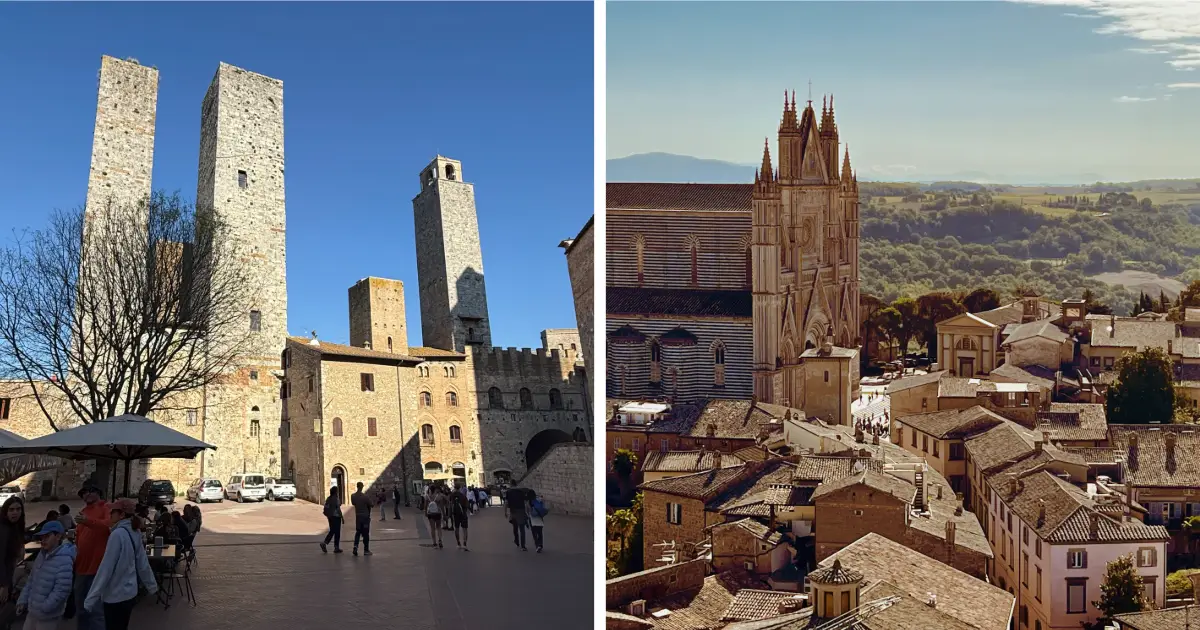
A side-by-side comparison of Tuscany vs. Umbria, featuring San Gimignano's tall stone towers on the left and the Orvieto Cathedral on the right.

Tuscany is Italy’s most celebrated countryside region. Iconic landscapes, well-known towns, and reliable infrastructure make it easy to plan and easy to enjoy. Umbria, directly to the east, is quieter, less visited, and offers a stronger sense of everyday Italian life. If you want a trip that feels polished and familiar, Tuscany is the right call. If you want something that feels a little more off the beaten path without sacrificing quality, Umbria is worth a serious look.

If you’re planning an Italy trip and trying to decide between Tuscany and Umbria, you’re asking the right question. Both regions offer hilltop towns, rolling countryside, exceptional food and wine, and a slower pace that’s hard to find closer to the major cities. But they deliver those things differently, and the difference matters when you’re deciding how to spend a limited number of vacation days.

This guide walks through the key differences so you can make the choice that fits how you like to travel.

The Landscape

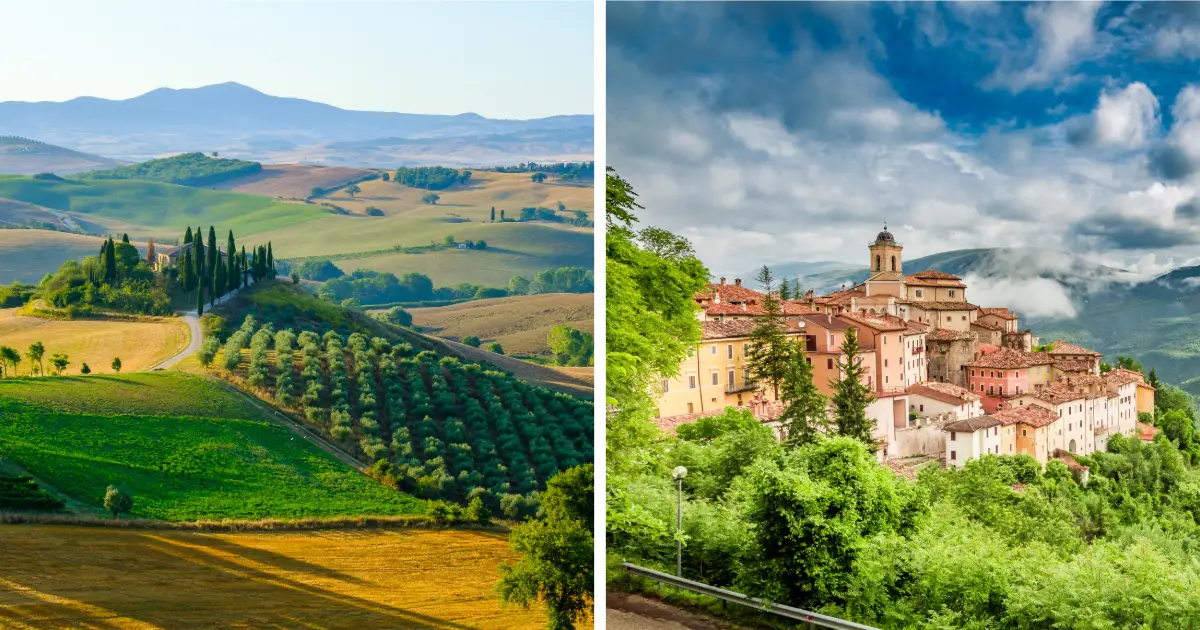
A side-by-side comparison of Tuscany vs. Umbria, showing rolling green hills on the left and a stone hilltop village under clouds on the right.
Tuscany’s landscape is one of the most recognizable in the world. The Val d’Orcia stretches across rolling hills dotted with cypress trees, stone farmhouses, and vineyard rows. It’s what most people picture when they think “Italian countryside,” and that’s not an accident. The region has been photographed and painted for centuries, and the scenery lives up to the reputation. Beyond the Val d’Orcia, Tuscany also offers the coastal hills of the Maremma, the vineyards of Chianti, and the dramatic tower skyline of San Gimignano.

Umbria has a different character. Often called the “Green Heart of Italy,” it’s more forested and varied than Tuscany, with mountain ranges, river valleys, and high plateaus that feel genuinely wild in places. The Sibillini Mountains frame the eastern edge of the region, and the Piani di Castelluccio, a high plateau famous for its spring wildflower blooms, offers scenery you won’t find anywhere else in central Italy. Lake Trasimeno, in the west, adds a quieter, lakeside dimension to the landscape.
 
Neither is better. They’re simply different. Tuscany is more immediately cinematic; Umbria takes a little longer to reveal itself.

Town Character

This is where the two regions diverge most clearly.

Tuscany’s most popular towns — San Gimignano, Pienza, Montepulciano, Montalcino — are beautiful and well worth visiting, but they’re built for tourism. In peak season, the streets fill quickly, parking lots fill faster, and the restaurants near the main piazza tend to price accordingly. That doesn’t make them not worth visiting. It just means you’re sharing the experience with a lot of other people who made the same good decision.

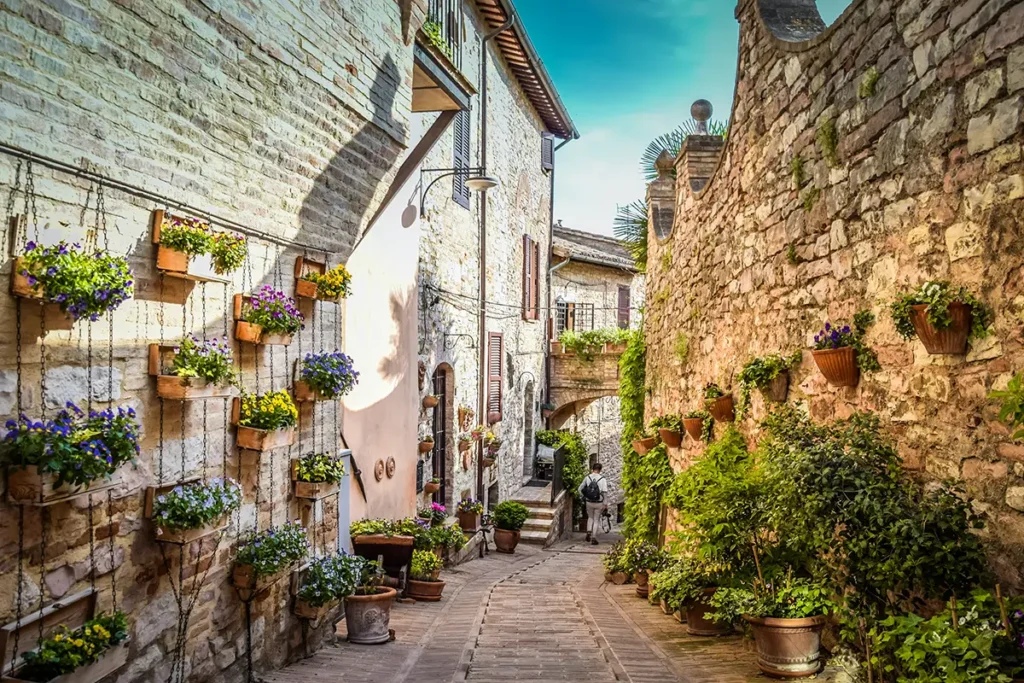
Umbria’s towns see far fewer visitors. Orvieto, Spoleto, Spello, and Todi are each genuinely interesting places with real history and character. On a Tuesday afternoon in July, you can walk through most of them without navigating a crowd. The towns feel less curated than their Tuscan counterparts, which is either a feature or a drawback depending on what you’re after. There are fewer English menus, fewer purpose-built wine bars, and more of a sense that the town exists for the people who live there.

For couples who want to feel like they’ve found something rather than followed a crowd, Umbria tends to deliver that more consistently.

Food and Wine

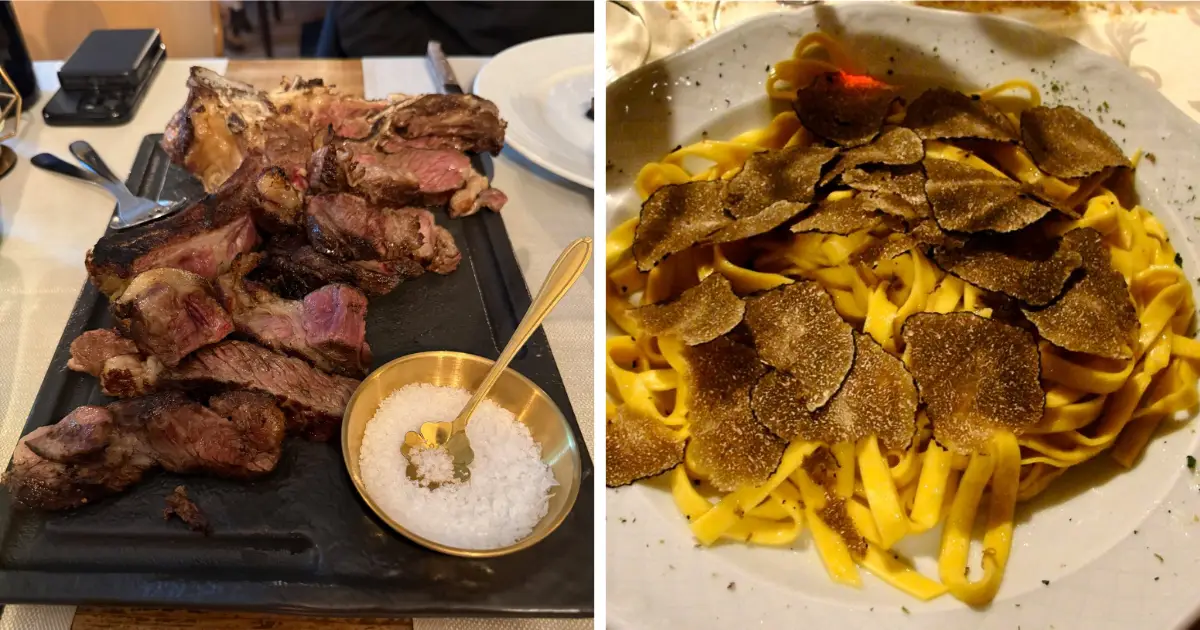
Classic dishes: bistecca alla Fiorentina from Tuscany and pasta with black truffles from Umbria
Tuscany’s food and wine culture is world-class and widely accessible. Chianti Classico, Brunello di Montalcino, and Vino Nobile di Montepulciano are wines most travelers already know by name. The cuisine builds on those wines naturally, with bistecca alla Fiorentina, ribollita, and pici pasta among the classics. Cooking classes, enotecas, and wine estates are easy to find and book, and the overall infrastructure around food tourism is mature. That’s an advantage if you want a seamless experience without much advance planning.

Umbria’s food identity is earthier and less globally marketed, but no less serious. The region is best known for its black truffles, particularly from around Norcia and Spoleto. Norcia itself has a centuries-old tradition of pork butchery that produces prosciutto, salami, and sausages found throughout central Italy. Pasta alla norcina, made with sausage, cream, and black truffle, is a dish worth seeking out on its own.

On the wine side, Umbria produces both a notable white and a distinctive red. Orvieto Classico, a crisp and dry white, is the region’s most widely exported wine. Sagrantino di Montefalco is Umbria’s signature red, a deeply tannic and age-worthy wine. It has a devoted following among Italian wine enthusiasts but doesn’t have the international name recognition of Brunello. For couples who enjoy discovering wines they haven’t encountered before, that’s part of the appeal. Umbria was also the first Italian region to receive special recognition for its olive oil across its entire territory, and the oil is central to nearly every meal.

Both regions take food seriously. The difference is mainly in how familiar the experience will feel when you sit down at the table.

Logistics and Getting Around

Tuscany is easier to navigate. Florence is a major international hub with frequent flights, the train network reaches most major towns, and self-driving is straightforward with well-marked roads and plenty of accommodation options along the way. English is widely spoken in tourist areas.

Umbria requires more planning. Most travelers arrive via Rome or Florence and travel onward by train or car. Public transit between smaller towns is limited, and a rental car or a private driver is often the most practical way to move around. That’s not necessarily a problem, but it means the logistics need more thought upfront. For couples working with a travel advisor, this is one of the places where having someone handle the details pays off most.

Crowds and Authenticity

A narrow stone alley in Spello, Italy, lined with historic brick houses decorated with colorful potted flowers and green vines.
Spello in Umbria
Tuscany is one of the most visited regions in Italy, and it shows in peak season, roughly May through September. Towns like San Gimignano and Pienza can feel overwhelmed on summer weekends, and even quieter spots in the Val d’Orcia see consistent traffic during those months. Traveling in shoulder season (April, early May, October) makes a meaningful difference, but Tuscany is never truly uncrowded.

Umbria operates at a noticeably different volume. It doesn’t have the same concentration of marquee destinations pulling international visitors, and that translates directly into your experience on the ground. The tradeoff is that some of the conveniences Tuscany offers, like the well-stocked enoteca open on a Sunday afternoon or the cooking class with immediate availability, are less reliably available in Umbria.

Cost

Both regions span a wide range of price points, and neither is inherently expensive or budget-friendly. That said, Tuscany’s most popular areas, particularly the Val d’Orcia and the towns around Siena, command a premium in peak season, especially for accommodation. Demand is high and supply in the most desirable spots is limited.

Umbria generally offers better value for comparable quality. Boutique hotels, agriturismi, and restaurants in Umbria tend to be priced more modestly than their Tuscan equivalents, and the overall experience doesn’t suffer for it. For couples who want to spend their budget on experiences rather than on the privilege of sleeping in the most photographed valley in Italy, Umbria often makes more financial sense.

Which Region Fits Your Travel Style?

Choose Tuscany if:

  • This is your first time exploring the Italian countryside
  • You want a landscape that matches the postcard version of Italy
  • You prefer established infrastructure and easy logistics
  • You’re combining countryside with Florence or Siena


Choose Umbria if:

  • You’ve done Tuscany and want something that feels different
  • Avoiding crowds matters more to you than famous views
  • You’re drawn to lesser-known wines and more rustic food traditions
  • You want a region where a good travel advisor’s knowledge actually gives you an edge

Can You Do Both?

Yes, and it works well, particularly on a 12- to 14-day Italy trip. Tuscany and Umbria share a border and are easy to connect by car. A natural approach is to spend five or six nights in each, using a central base in each region rather than moving every day. The combination gives you the iconic Tuscan scenery early in the trip and the quieter Umbrian experience as a contrast.

The one thing to avoid is trying to add a third major region on top of both. Two regions done well is a much better trip than three regions done partially. For help thinking through the structure, How to Plan a 10-Day Italy Itinerary That Actually Works covers the key decisions in detail.

Frequently Asked Questions

Is Umbria worth visiting compared to Tuscany?

Umbria is absolutely worth visiting. It’s one of the most underrated regions in Italy, offering hilltop towns, excellent food and wine, and genuine countryside character with far fewer crowds than Tuscany. It’s a different kind of experience, not a lesser one.

Both Tuscany and Umbria work well for couples. Tuscany offers more established romantic infrastructure, with well-known wine estates, refined restaurants, and iconic scenery. Umbria offers a quieter, more private experience. The better fit depends on whether you want a trip that feels polished or one that feels like a discovery. For a deeper look at planning an Italy trip as a couple, see Italy for Couples: How to Plan a Cultural Trip You’ll Both Love.

For a first trip to the Italian countryside, Tuscany is the more accessible choice. The logistics are easier, the towns are better set up for visitors, and the scenery is immediately rewarding. Umbria tends to resonate more with travelers who already have some Italy experience. If you’re still deciding on your overall itinerary, First Time in Italy: Should You Visit Rome, Florence, or Venice? may help with the broader picture.

It’s possible to use trains between major towns like Perugia, Orvieto, and Spoleto, but a car gives you significantly more flexibility, especially for smaller towns and countryside areas. Many couples traveling with a travel advisor arrange a private driver for part of their Umbria time, which also takes the stress out of navigating unfamiliar roads.
Umbria is known for its black truffles (especially from Norcia), Sagrantino di Montefalco wine, and medieval hilltop towns with far fewer crowds than their Tuscan counterparts. It’s also called the “Green Heart of Italy” for its forested, varied landscape.
In peak season, parts of Tuscany, particularly San Gimignano and the most famous Val d’Orcia viewpoints, can feel genuinely overcrowded. Traveling in shoulder season and choosing less-visited towns within the region helps considerably. But if crowd avoidance is a priority, Umbria is the more reliable choice — and for some travelers, it’s become the preferred alternative to Tuscany for exactly that reason.
Plan for at least five nights in either region to do it justice. Fewer than that and you’ll spend too much time in transit. If you’re combining both, 10 to 14 days total gives you enough time to settle in and explore at a reasonable pace.

Plan Your Italy Countryside Trip

Tuscany and Umbria are both excellent. The question is just which one fits your trip. If you’re ready to start planning an Italy countryside trip, I can help you build an itinerary around the region that fits how you like to travel. Schedule a complimentary consultation call and let’s put something together.


Credits:

Tagliatelle al Tartufo Nero (Black Truffle)” by Umbria Lovers, CC BY-SA 2.0