
The Real Cost of an Italy Trip: Complete Budget Breakdown for 2026
A thoughtfully planned Italy trip costs roughly $500-$650 per person, per day – or about $9,000–$13,000 all-in for a couple for 9-10 days – depending on destinations, time of year, and accommodation level. This comprehensive budget includes flights, a curated itinerary with guided activities, most meals, and a travel advisor’s planning fee.
What Goes Into an Italy Trip Budget?
Before diving into the sample budgets, it helps to understand the main cost categories and what each one covers.
The itinerary package is the core of most well-planned Italy trips. A thoughtfully designed itinerary typically includes centrally located hotels, guided tours and cultural activities, and between-city transportation like high-speed trains. This is where much of your Italy experience lives and where quality matters most.
Flights are your largest single variable. Roundtrip economy flights from major US cities to Italy range from $500–$900 per person in shoulder season, with off-season fares sometimes lower and peak summer fares sometimes higher.
Meals are largely out of pocket beyond hotel breakfast. A realistic average is $75 per person per day for lunch and dinner — some meals more casual and less expensive, others a nicer restaurant experience.
Airport transfers cover getting between the airport and your hotel at the start and end of your trip. Budget approximately $150 per transfer for two people.
Local public transportation covers incidental costs like metro rides and buses within cities. This is typically a small daily expense — roughly $10 per person per day. Taxi fares may increase this amount.
A travel advisor's planning fee covers the time and expertise required to design your itinerary, handle all bookings, prepare you for travel, and support you throughout your trip. More on this below.
If you're weighing whether a travel advisor makes sense for your trip, this article walks through the decision in detail.
What Affects Your Italy Trip Cost?
Time of Year
Accommodation Level
Length and Destinations
Longer trips cost more in total, but your flight expense stays fixed regardless of how many nights you stay. Adding days actually reduces your per-day average, making longer trips better value than they might initially appear.
Destinations matter significantly for overall cost. Northern Italy — Venice, the lake district, Milan — commands premium hotel rates, particularly in spring and fall. Venice in particular has limited accommodation supply and consistently higher prices. Central Italy (Rome, Florence, Tuscany) offers the best balance of iconic destinations and reasonable pricing, with Rome spanning all price ranges depending on neighborhood. Southern Italy is where your budget stretches furthest: Sicily and Puglia offer significantly better value than central Italy for hotels, food, and activities, with fewer American tourists and deeply authentic cultural experiences. The Amalfi Coast is the exception — it's Italy's most price-sensitive destination in summer, with peak-season hotel rates that can double compared to May pricing.
If you're still working out how many destinations make sense for your trip, this guide to planning a 10-day Italy itinerary walks through the decision.
Two Sample Italy Trips: What They Actually Cost
A Cultural Deep-Dive Through Italy's Iconic Cities
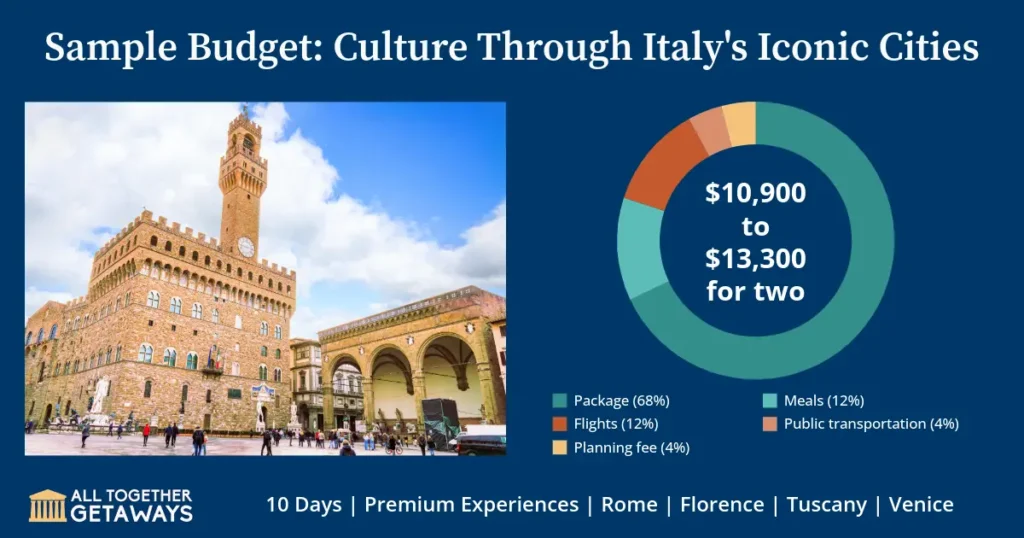
This 10-day itinerary moves through Rome, Florence, and Venice with an emphasis on cultural depth and exclusive access. It’s designed for travelers who want to experience Italy’s art, history, and daily life with more context than a standard sightseeing tour provides, and without spending hours in lines.
What’s included:
- 9 nights in centrally located 4-star hotels, with daily breakfast included
- Early-entrance Vatican Museums visit, experiencing the Sistine Chapel before the crowds
- Guided visit to Rome’s crypts, catacombs, and underground layers
- Authentic street food and market experience in Rome’s Testaccio neighborhood
- Private combination tour of the Accademia and Uffizi in Florence
- Evening walking tour of Florence’s legends, hidden corners, and Renaissance wine windows
- Full-day Tuscany tour including Siena, San Gimignano, and Pisa with lunch at a wine estate
- Rooftop aperitivo with Prosecco overlooking Venice
- Guided visit to Doge’s Palace and St. Mark’s Basilica
- Private, hands-on Venetian carnival mask lesson with a local artisan
- Premium class high-speed trains between cities
Sample Budget — 4-star hotels, per person (double occupancy):
| Cost Component | Estimated Cost |
|---|---|
| Hotels, tours, and trains | $3,700–$4,500 |
| Flights | $500–$900 |
| Meals (lunch & dinner) | $750 |
| Airport transfers | $150 |
| Public transportation | $100 |
| Total per person | $5,200–$6,400 |
| Planning fee (per household) | $500 |
| All-in total for two | $10,900–$13,300 |
Prefer 3-star hotels? The same itinerary with 3-star accommodations costs approximately $500 less per couple.
A Romantic Journey Through Italy's Lake District
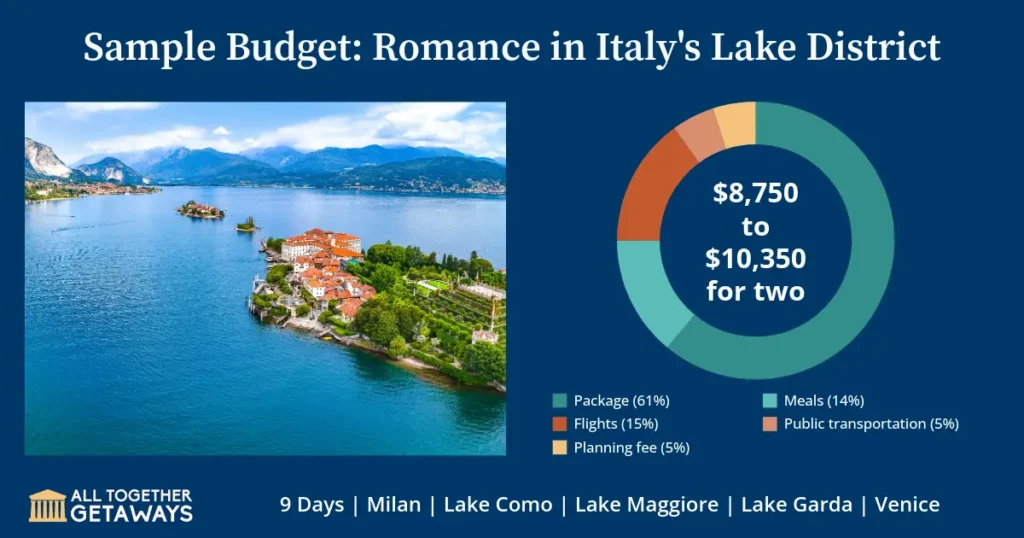
This 9-day itinerary explores a side of Italy many American travelers haven’t seen — the elegant northern lake district, moving from Milan through Lake Como, Lake Maggiore, and Lake Garda before finishing in Venice. It’s designed for couples who want beauty, atmosphere, and a slower pace, with experiences that feel intimate rather than crowded.
What’s included:
- 8 nights in centrally located 4-star hotels, with daily breakfast included
- Full-day Lake Como, Bellagio, and Lugano tour — alpine landscapes and lakeside villages
- Borromean Islands visit on Lake Maggiore — aristocratic palaces and formal gardens
- Small-group Sirmione and Lake Garda tour — medieval charm and turquoise water
- Private gondola ride through Venice’s most romantic canals
- Full-day guided tour of Murano, Burano, and Torcello in the Venetian lagoon
- Premium class high-speed trains between cities
Sample Budget — 4-star hotels, per person (double occupancy):
| Cost Component | Estimated Cost |
|---|---|
| Hotels, tours, and trains | $2,700–$3,100 |
| Flights | $500–$900 |
| Meals (lunch & dinner) | $675 |
| Airport transfers | $150 |
| Public transportation | $100 |
| Total per person | $4,125–$4,925 |
| Planning fee (per household) | $500 |
| All-in total for two | $8,750–$10,350 |
Prefer 3-star hotels? The same itinerary with 3-star accommodations costs approximately $250 less per couple.
What's Not Included in These Budgets
A few expenses aren't captured in the sample budgets above. None of them are surprises, but they're worth planning for.
City tourist taxes are charged separately at hotels in most Italian cities—typically €3–€10 per person per night, paid directly at check-out.
Tips are handled differently in Italy than in the US. Service is usually included in restaurant bills (look for servizio on the check). Leaving €1–€2 at cafés, 5%–10% per table at dinner, and 10% for drivers and guides is appreciated but not expected the way US tipping is.
Travel insurance is strongly recommended and worth building into your overall trip budget. Premiums vary significantly based on traveler age and total trip cost, so it's difficult to provide a single estimate. Italy doesn't accept US health insurance, meaning medical expenses would be paid out of pocket without coverage. A comprehensive plan also protects against trip cancellation, flight interruption, and lost luggage.
Shopping, souvenirs, and personal expenses vary entirely by traveler. Whether it's a leather bag in Florence, a bottle of Sicilian olive oil, or a few extra gelatos, these costs are real but entirely personal.
Optional add-on experiences beyond what's included in the itinerary package — an extra museum, a day trip, a special dinner reservation — are out of pocket and worth budgeting for if you have specific experiences in mind.
An international phone plan from your US carrier, or a European eSIM plan that covers text and data. It's worth confirming options and costs with your carrier before you leave.
Where It's Worth Spending More
The sample itineraries above already incorporate many of these recommendations, but they're worth understanding as principles, not just line items.
Central hotel locations save time, energy, and incidental transportation costs. Walking to major sites, restaurants, and train stations from your hotel is worth paying more per night. The 4-star packages above prioritize this.
At least one signature cultural experience is what makes an Italy trip memorable rather than just pleasant. This might be an early-morning museum visit before crowds arrive, a hands-on cooking or craft experience with a local expert, or a guided tour that brings history to life in a way a guidebook can't. Both sample itineraries include several of these — it's one of the reasons the package cost is higher than a basic hotel-and-flights booking.
Expert local guides in complex destinations are worth the investment in places where context transforms the experience. Standing in the Roman Forum without any background is very different from understanding what you're looking at. The cultural deep-dive itinerary above includes guided access at Rome's most historical sites for exactly this reason.
Quality food experiences don't require Michelin dining every night, but one exceptional regional dinner, a market visit, or a food-focused tour creates memories that outlast any museum. The Testaccio market experience and Tuscany lunch in the cultural itinerary above reflect this philosophy.
Skip-the-line and early-access tickets are essential at major sites during peak season and valuable year-round. The Vatican early-entrance experience and private museum tours in the cultural itinerary eliminate hours of waiting — time better spent elsewhere.
Is a Travel Advisor Worth the Cost?
Planning an Italy trip takes significant time: researching regions, comparing hotels, figuring out train schedules, booking tours, and making sure all the logistics connect seamlessly. Most first-time Italy travelers spend 30–50 hours planning before they ever board a plane.
A travel advisor who specializes in Italy charges a planning fee for this work. My fee is $300-$750 per household, depending on the length of the trip. This covers initial consultations, custom itinerary design, booking all components, pre-departure documentation, and support throughout your travels if anything comes up.
The value comes from a few places:
Time savings. You spend a few hours telling me what you want. I spend many more hours building it.
Better experiences. Access to vetted guides, drivers, and experiences that don't surface easily in online searches — and the confidence that what I recommend has been evaluated for quality.
Smart budget allocation. Helping you spend where it creates the most value for your specific interests, rather than defaulting to the most expensive option or missing something worth the investment.
Problem solving. When flights get cancelled or questions arise mid-trip, you have professional support rather than spending vacation time on hold with customer service. My preferred suppliers also provide 24/7 support from staff on the ground in Italy.
Whether a travel advisor makes sense depends on your situation. If you enjoy the planning process, have time to research thoroughly, and feel confident managing international logistics, DIY works fine. If this is a significant trip, time is limited, or you want the confidence of knowing everything has been handled thoughtfully, a planning fee often costs less than the mistakes it prevents.
For a full explanation of how my fees work and what's included, visit How Much Does a Travel Advisor Cost for Italy?
Frequently Asked Questions
How much should I budget for a 10-day Italy trip?
Are there ways to reduce the cost of an Italy trip?
What's the cheapest time to visit Italy?
How much spending money should I bring to Italy per day?
Are credit cards widely accepted in Italy?
How much does food cost in Italy per day?
Is Italy a good destination for couples?
What's not included in typical Italy trip budgets?
Planning Your Italy Trip Budget
Italy trip costs vary based on where you go, when you travel, and how you balance guided experiences with independent exploration. The budgets in this article are built around real itinerary pricing and realistic cost estimates — not best-case scenarios or vague approximations.
The travelers who get the most out of Italy aren't necessarily those who spend the most. They're the ones who understand where their money creates the best experience: a centrally located hotel that saves time and energy, a guided experience that brings history to life, a dinner that reflects the region rather than the tourist menu. Getting that balance right is what thoughtful planning is for.
If you'd like to talk through what an Italy trip might look like for you — what it would include, what it would cost, and how to make sure it fits both your interests and your budget — let's talk. Schedule a complimentary planning call and we'll figure out the right approach together.