
Italy with Kids: A Practical Guide to Planning a Family Vacation

Italy is one of the best family travel destinations in the world, but a successful trip depends on choosing the right destinations, building in enough downtime, and matching your itinerary to your kids’ ages and interests. This guide covers where to go, how long to stay, where to sleep, and how to pace an Italy family vacation so everyone (adults included) actually enjoys it.
Is Italy a Good Destination for Families?
The short answer is yes, but with some honest caveats.
Italy rewards curiosity, and kids who are naturally curious tend to thrive there. The food alone is enough to win most children over within the first 24 hours. The history is everywhere and tangible in a way that textbooks can’t replicate. And the pace of daily life, with long meals, afternoon slowdowns, and neighborhoods designed for walking, suits families better than many destinations that market themselves as kid-friendly.
That said, Italy is not a theme park. It doesn’t bend itself to children the way a resort destination does. Lines can be long, cobblestones are uneven, and not every museum has been designed with a ten-year-old’s attention span in mind. The families who have the best experience in Italy are the ones who plan with realistic expectations: building in downtime, choosing experiences that have genuine appeal for kids, and resisting the urge to pack too much into each day.
What Age Works Best for Italy Travel with Kids?
There’s no single right answer, but most families find the sweet spot somewhere between ages seven and twelve. Kids in that range are old enough to engage with history and culture in a meaningful way, physically capable of a day of walking, and young enough that a gelato after every museum visit still feels like a genuine reward.
Younger children can absolutely do Italy. Many families travel there successfully with kids under seven, but the experience skews more toward managing logistics than cultural engagement. Teenagers tend to do well if they have some say in what the itinerary includes, which is worth keeping in mind when planning.
What Families Get Wrong About Italy Before They Go
The most common mistake is treating Italy like a checklist: Rome, Florence, Venice, two weeks, done. The result is a trip that moves too fast, covers too much ground, and leaves everyone exhausted by day five.
Italy with kids works best when you slow down. Fewer destinations, more time in each place, and room in the daily schedule for the unplanned moments. The neighborhood bakery, the unexpected piazza, the afternoon where nobody has anywhere to be. That kind of pacing doesn’t happen by accident. It has to be built into the plan.

How Long Should Your Italy Family Vacation Be?
For most families, ten to fourteen days is the right range. It’s enough time to visit two or three destinations without rushing, absorb some of the slower rhythms of Italian daily life, and recover from jet lag without sacrificing half the trip.
Shorter trips, a week or less, tend to feel compressed, especially when you factor in travel days on either end. You can make a week work, but you’ll need to limit yourself to one region or one or two cities and manage expectations accordingly.
Longer trips of two weeks or more open up real possibilities. You can base yourself in one place for several days at a time, take day trips rather than packing and unpacking constantly, and let the trip breathe in a way that shorter itineraries simply don’t allow.
Why Fewer Destinations Means a Better Trip
Every time you change cities, you lose half a day, sometimes more. Packing, transferring, checking in, getting oriented. With kids, that friction is amplified. A trip that visits four cities in ten days might sound great on paper, but in practice it often means nobody settles in anywhere.
Two or three well-chosen destinations, with three to five nights in each, almost always produce a better experience than an itinerary that tries to cover everything. The goal is depth, not distance.
Where to Go in Italy with Kids
Italy has more to offer families than most people realize when they start planning. The usual suspects, Rome, Florence, and Venice, are popular for good reasons, but they’re not the only options, and they’re not equally suited to every family. Here’s an honest look at six destinations worth considering.
Rome
Rome is the strongest all-around family destination in Italy, and for most families it’s the right place to start. The history is genuinely accessible. The Colosseum, the Roman Forum, the Vatican all land differently when you’re standing inside them than they do in a classroom. The city is walkable, the food is excellent, and there’s enough variety that kids and adults can find something that interests them.
Rome also has the infrastructure to handle family travel well. Accommodations range widely in style and price, neighborhoods like Trastevere offer a slower and more residential feel away from the tourist center, and the city is large enough that you can spend four or five days without running out of things to do.
Best suited for: Most families, most ages. Rome is the closest thing Italy has to a universal recommendation.
Amalfi Coast and Sorrento
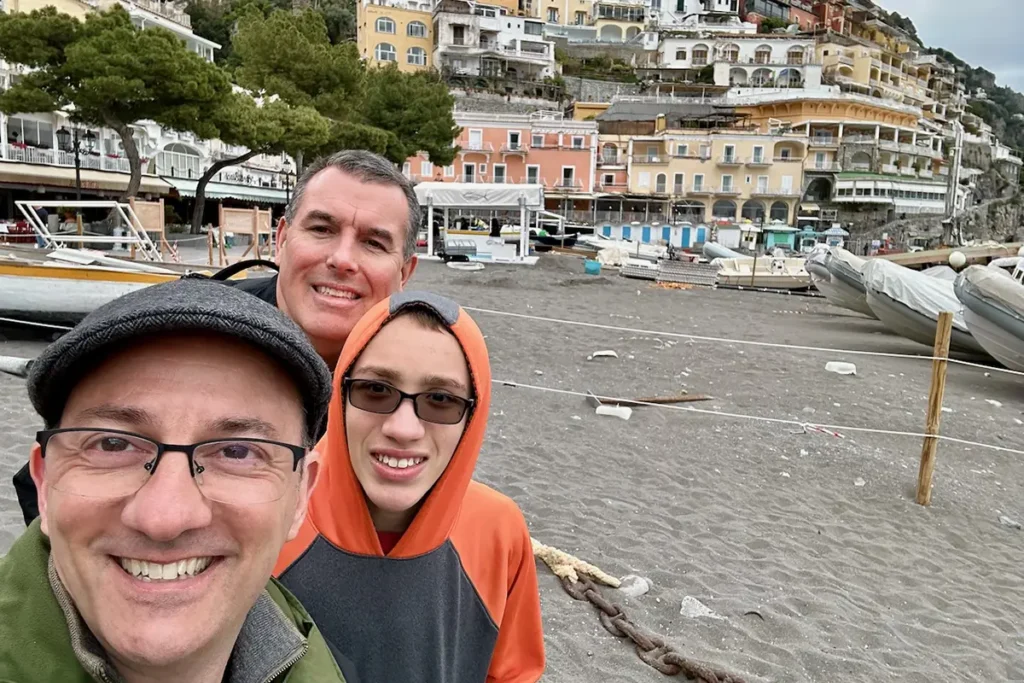
The Amalfi Coast is visually stunning, and Sorrento makes a practical and comfortable base for exploring it. From there, families have easy access to Pompeii, one of the most genuinely engaging historical sites in Italy for kids, as well as boat trips along the coast, beach days, and the slower pace that comes with being outside a major city.
The logistics require some planning. The coastal road is famously narrow and the towns are built vertically into cliffs, which means a lot of steps and limited stroller accessibility. For families with older kids who can handle the terrain, the payoff is considerable.
Best suited for: Families who want a mix of history and outdoor experience, and kids roughly eight and older who can manage some physical activity.
Florence
Florence is a more concentrated, manageable city than Rome, which makes it appealing from a logistics standpoint. But it skews more art-heavy than most other Italian destinations, which can be a harder sell for younger kids. The Uffizi Gallery and the Accademia are world-class, but a seven-year-old’s tolerance for Renaissance painting has limits.
What Florence does well for families is its positioning as a base. Day trips to Siena, the Tuscan countryside, or Cinque Terre are all accessible, and the city itself is compact enough that you’re rarely far from a good meal or a quiet piazza.
Best suited for: Families with kids ten and older who have some interest in art or history, or families who want a central base for exploring Tuscany more broadly.
Sicily
Sicily is underrated for family travel and worth serious consideration for families willing to go a little further off the familiar path. The Greek temples at Agrigento and Selinunte are among the best-preserved ancient ruins in the world, often less crowded than their Roman counterparts on the mainland. Active families may consider a tour or hike of the active volcano, Mt. Etna. Add beaches, excellent food, and a distinctly different character from mainland Italy, and Sicily makes a compelling case.
The tradeoff is that it requires a bit more logistical planning, typically a domestic flight from Rome or Milan, and the island is large enough that you’ll want to be thoughtful about which areas to focus on.
Best suited for: Families with a sense of adventure, older kids with some interest in ancient history, and anyone who wants Italy with significantly fewer tourists.
Cinque Terre
The five villages of Cinque Terre are among the most photographed places in Italy, and the scenery lives up to the pictures. For active families, the hiking trails that connect some of the villages offer a physical dimension that most Italian itineraries lack. The villages themselves are small, colorful, and genuinely charming, though they’re busy in peak season.
Cinque Terre works best as a two or three night stay rather than a primary destination. It fits naturally into an itinerary that includes Florence or the broader Liguria region.
Best suited for: Active families with kids eight and older. The hiking can be strenuous and some trails are more accessible than others, so it’s worth researching specific routes before you go.
Lake Garda

Lake Garda offers something that most Italian destinations don’t: genuine downtime. Water activities, a slower pace, and scenery that doesn’t require any cultural context to appreciate. It’s a natural complement to a city-heavy itinerary, particularly at the end of a trip when energy levels are lower.
Gardaland, the amusement park on the lake’s eastern shore, is worth mentioning if you’re traveling with younger kids. It’s a legitimate full-day option that doesn’t require any historical context or sustained attention spans.
Best suited for: Families looking for a relaxing bookend to a busier itinerary, or those traveling with younger kids who need a lower-key day or two built in.
How to Pace an Italy Trip with Kids
Pacing is where most family itineraries go wrong, and it’s also where thoughtful planning makes the biggest difference.
The instinct when visiting somewhere as rich as Italy is to fill every day. One more museum, one more church, one more town. But kids, and honestly most adults, don’t absorb experiences that way. A morning at the Colosseum followed by a long lunch and an afternoon wandering a neighborhood will stick with a child longer than a day that hits four major sights in eight hours.
What a Realistic Travel Day Looks Like
A reasonable rhythm for most families is one major activity or site per day, ideally in the morning when energy is highest and crowds are more manageable. Afternoons work well for slower exploration: a market, a neighborhood, a gelato stop that turns into an hour sitting in a piazza. Evenings in Italy tend to be unhurried by design, which suits families well once you stop fighting the local schedule and start working with it.
Pre-booking timed entry for major sites (like the Colosseum, the Vatican Museums, and the Uffizi) is not optional. Lines without reservations can consume hours, and that’s time no family gets back.
Building in Downtime Without Wasting the Trip
Downtime isn’t wasted time. A morning at the hotel pool, an afternoon with nowhere to be, a day that ends earlier than planned because everyone is tired: these aren’t failures of planning, they’re what makes the rest of the trip sustainable. Families who build rest into the schedule tend to finish the trip still enjoying each other’s company. Families who don’t often hit a wall somewhere around day eight and spend the last few days going through the motions.
Where to Stay in Italy with Kids
Accommodation choices matter more for families than for couples traveling without kids, and the decisions are a little more layered than simply picking a hotel with good reviews.
What to Look for in Family-Friendly Accommodations
Space is the first consideration. A family of four in a standard hotel room is workable for a night or two but uncomfortable over a longer stay. Hotels that sleep three (triples) are a little easier to find than those that sleep four (quads). Alternatives include connecting rooms and suites with a pull-out bed.
Location matters nearly as much as space. Staying centrally means less time in transit and more flexibility to return to the hotel mid-day if someone needs a break. In Rome and Florence especially, central properties tend to be more expensive, but the trade-off in convenience is usually worth it.
Apartment Rentals vs. Hotels
Both work well for families; the right choice depends on your travel style. Apartments offer more space, a kitchen for casual meals, and a more residential feel that some families find relaxing. Hotels offer daily housekeeping, consistent service, and the kind of support that matters when something goes wrong: a missed booking, a question about logistics, a restaurant recommendation at 7pm. For the best of both worlds, “aparthotels” offer the space of an apartment with the amenities of a hotel, like front-desk and housekeeping service.
For trips of a week or longer, many families find that a mix works well. A hotel for the first few nights while you’re orienting, then an apartment for a longer stay in one place.
What to Skip on Your First Italy Family Trip
Venice is worth addressing directly, because it appears on almost every Italy itinerary but can be complicated for families. The city is magical and there’s nothing else like it, but it’s also expensive and logistically tricky with younger kids. A day trip from the mainland is a reasonable way to experience it without committing to an overnight stay. If you do stay, one or two nights is plenty for most families.
The Amalfi Coast drive is another one worth flagging. The road is beautiful but also narrow, winding, and stressful to navigate, particularly in a rental car with kids in the back. If the Amalfi Coast is on your list, consider basing in Sorrento and using ferries and local transportation to get around rather than driving yourself.
More broadly: the first Italy trip doesn’t have to include everything. Trying to do Rome, Florence, Venice, the Amalfi Coast, and Tuscany in two weeks is a recipe for exhaustion. Pick two or three destinations, go deep, and leave something for the next trip.
How a Travel Advisor Makes Italy with Kids Easier
Planning an Italy family vacation involves a lot of moving parts: flights, accommodations, transfers, activity reservations, restaurant timing, pacing. The decisions compound quickly, and a mistake on accommodation location or a misread of how long a site visit actually takes can affect the whole day.
What Good Planning Actually Handles
A travel advisor who knows Italy well can help you avoid the decisions that are easy to get wrong from home. Which neighborhoods actually work for families with young kids. Which tour operators run experiences that engage children rather than talking over them. Which transfers are worth booking in advance and which ones you can handle on the ground. How to build an itinerary that moves at the right pace for your family specifically, not just for a generic family traveler.
Why Family Pacing Is Harder to Get Right Than It Looks
The biggest value isn’t any single booking. It’s the architecture of the trip: how the days connect, where the rest is built in, how much ground to cover and when to slow down. That’s judgment that comes from experience, and it’s harder to replicate with a research spreadsheet than most people expect when they start planning on their own.
If you’re planning an Italy family vacation and want to talk through what a trip might look like, I offer a complimentary consultation with no obligation to book. Learn more about how I work and what a planning fee covers.
Frequently Asked Questions
What is the best city in Italy to visit with kids?
Rome is the strongest all-around choice for most families. It has the most variety, the most accessible history, and the infrastructure to handle family travel well. For families who want a slower pace or a beach component, Sorrento and the Amalfi Coast area is a strong alternative.
What age is best for taking kids to Italy?
Most families find that kids between seven and twelve get the most out of Italy. They’re old enough to engage meaningfully with the history and culture, and the experience tends to stick. That said, Italy is workable at almost any age. The itinerary just looks different depending on how old your kids are.
How long should a family trip to Italy be?
Ten to fourteen days is the right range for most families. It allows time for two or three destinations without rushing and leaves room for the slower pace that makes Italy worth visiting in the first place.
Is the Amalfi Coast good for families with young children?
It can be, but it requires realistic planning. The terrain is hilly and the towns involve a lot of steps, which limits accessibility for strollers and young children who tire easily. Families with kids eight and older tend to do better there. Pompeii, which is nearby, is one of the most engaging historical sites in Italy for kids of almost any age.
Is Sicily worth visiting with kids?
Yes, and it’s underused by family travelers. The ancient ruins are world-class and often far less crowded than sites in Rome or Florence. The food is excellent, the beaches are good, and the island has a character that’s genuinely different from mainland Italy. It requires slightly more logistical planning, but the experience tends to surprise families who make the effort.
Do I need a travel advisor to plan Italy with kids?
You don’t need one, but the right advisor makes a meaningful difference. Italy family vacation planning involves enough complexity, from accommodations and pacing to activity reservations and transfers, that mistakes are easy to make from home and some of them are expensive to fix. A good advisor helps you avoid the common ones and builds an itinerary that fits how your family actually travels. Learn more: Should You Use a Travel Advisor to Plan Your Italy Trip?
Ready to Start Planning Your Italy Family Vacation?
A well-planned Italy family vacation is one of the most rewarding trips you can take together. If you’re ready to move from research to planning, I’d be glad to help you build an itinerary that fits your family’s interests, pace, and budget.
Tagged non-featured