First Time in Italy: Should You Visit Rome, Florence, or Venice?
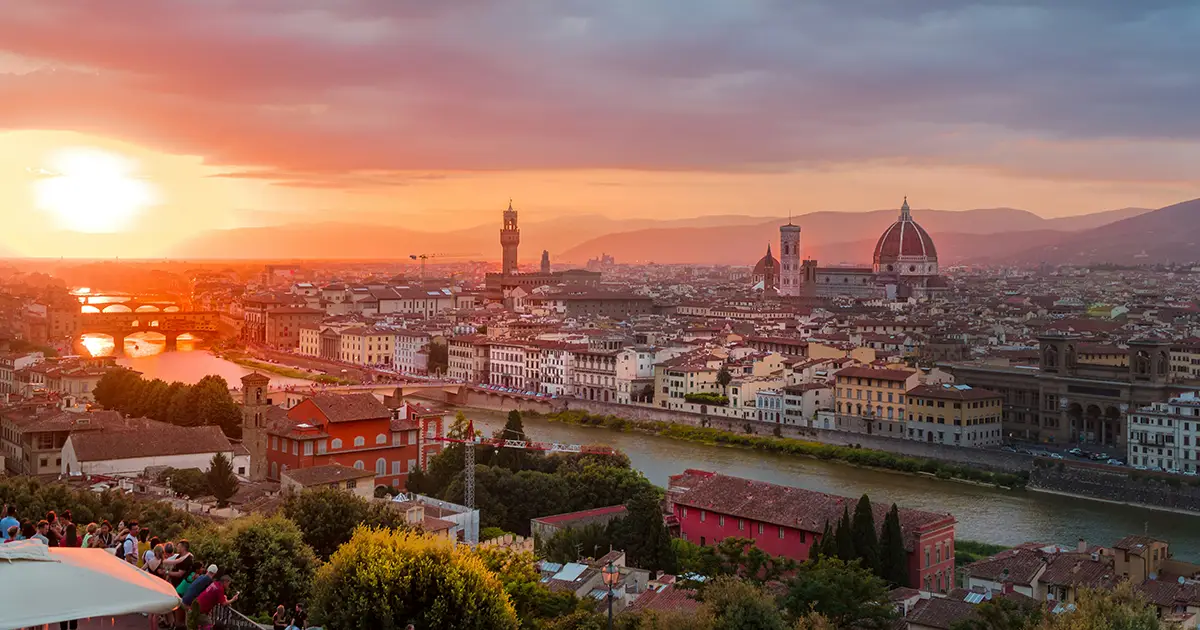
A golden sunset illuminates the Florence skyline, highlighting the Duomo and Ponte Vecchio over the Arno River. Florence is a great option for art lovers' first time in Italy.

For most first-time visitors to Italy, the right city depends on your interests and who’s traveling with you. Rome suits history-focused travelers; Florence offers art, food, and an easier pace; Venice delivers a visually unique experience that rewards slowing down. Most 10-day itineraries can accommodate two of the three comfortably.

For most first-time visitors to Italy, the question isn’t whether to visit Rome, Florence, or Venice — it’s which one to prioritize, and whether you have time for all three. The right answer depends less on which city is “best” and more on what you actually want from your trip and who’s traveling with you. This guide walks through both so you can make a decision that fits your trip rather than someone else’s itinerary.

If you’ve already decided on your cities and want help thinking through how to structure your time, the 10-day Italy itinerary guide covers pacing, logistics, and how many destinations actually work in a given trip length.

Why This Question Is Harder Than It Looks

The standard advice is to start with Rome. It’s the most visited city in Italy, it anchors most classic first-timer itineraries, and there’s no shortage of content telling you it’s essential. That advice isn’t wrong — but it’s incomplete.

Rome is the right choice for a lot of travelers. It’s not the right choice for all of them. Florence and Venice each offer something Rome doesn’t, and depending on your interests and travel style, one of those cities might actually be a better fit for how you want to spend your time in Italy.

The decision gets more complicated when you factor in who’s coming with you. A couple prioritizing food and art has different needs than a family with kids. A first-timer who wants an easier entry point has different priorities than someone who’s been to Europe before and knows they can handle a big, overwhelming city.

Start with What Pulls You

The most useful first question isn’t “which city is most popular?” It’s “what do I actually want to experience?”

If Ancient History and Scale Are the Draw
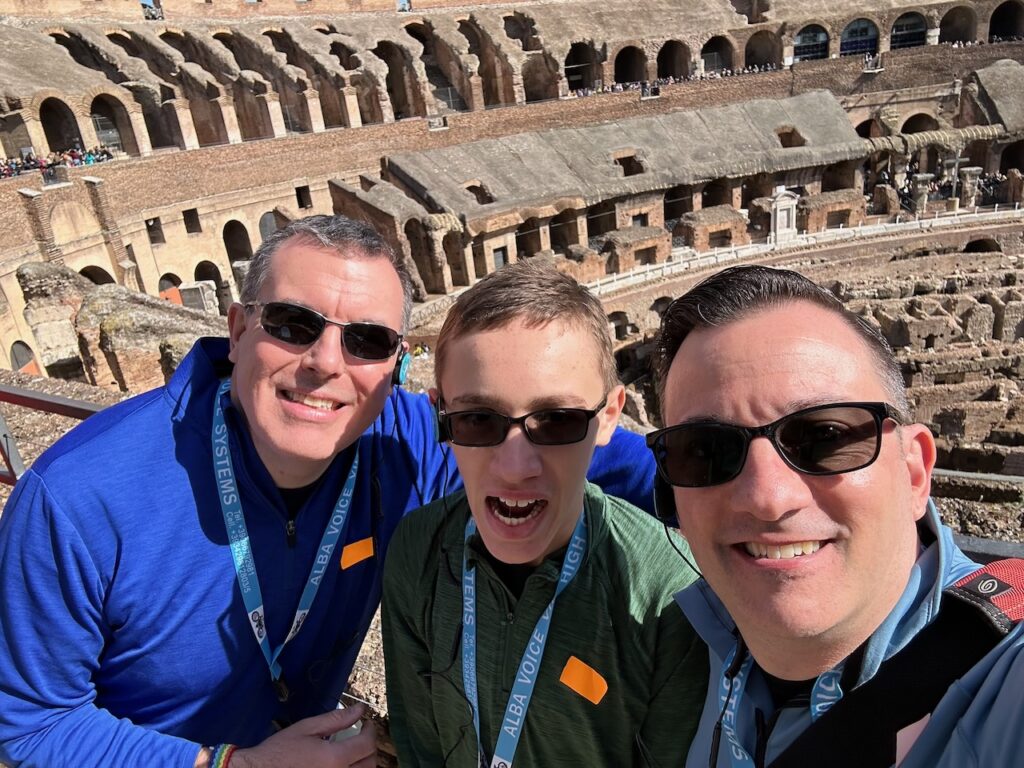
My son loves history and archaeology, so the Colosseum was a big hit for his first trip to Italy!
Rome is the only choice. No other city in Italy — or arguably in the world — puts you this close to ancient history at this scale. The Colosseum, the Roman Forum, the Pantheon, the Vatican: these aren’t just tourist attractions, they’re the foundation of Western civilization sitting in the middle of a functioning modern city. If that’s what excites you, Rome delivers in a way Florence and Venice simply can’t.

Rome also rewards curiosity. You can spend an entire afternoon wandering Trastevere or the Jewish Ghetto and find as much texture as you would in any museum. The city is layered in a way that takes time to appreciate, which is part of why it benefits from at least four nights.

If Art, Food, and a More Manageable Pace Appeal

Florence is rich in art museums, including the Galleria dell'Accademia (featuring Michelangelo's David), the Uffizi Gallery, and the Palazzo Vecchio
Florence is Italy’s most concentrated artistic city, and it’s also the most approachable of the three. It’s compact and walkable, easier to orient yourself in than Rome, and the density of world-class art — the Uffizi, the Accademia, the Duomo — is hard to match anywhere. If Renaissance art is the reason you’ve always wanted to go to Italy, Florence is where that interest gets answered.

Florence also sits in the middle of Tuscany, which matters. A day trip to the Chianti wine region, Siena, or San Gimignano is easy from Florence and adds a completely different dimension to the trip — rolling countryside, hill towns, wine tastings — without requiring a hotel change.

For food-focused travelers, Florence punches above its weight. The Mercato Centrale, the city’s trattorias, and the surrounding Tuscan countryside give you access to one of Italy’s most celebrated culinary regions.

If You Want Something Visually Unlike Anywhere Else
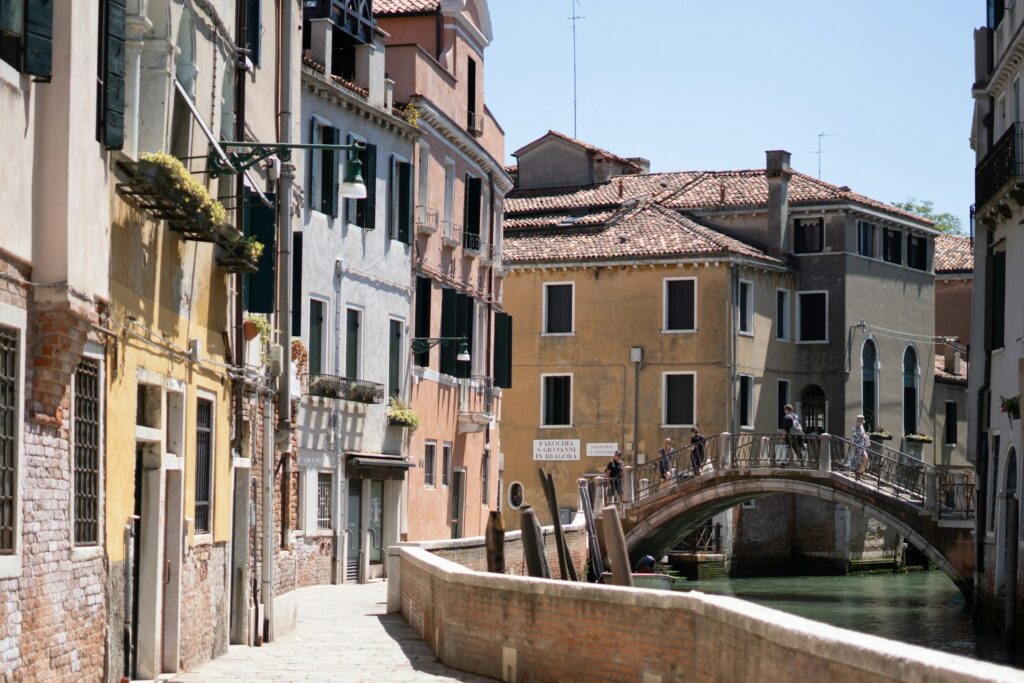
Getting lost while exploring the side streets and canals of Venice is a badge of honor!
Venice is in a category of its own. There’s no city in the world that looks like it, and that visual strangeness is both its greatest appeal and the reason some travelers leave feeling like they didn’t quite connect with it. If you’re drawn to the idea of a city built on water — navigating by foot and boat, no cars, canals instead of streets — Venice delivers that experience completely.


The trade-off is that Venice is smaller than Rome or Florence in terms of traditional sightseeing. St. Mark’s Square, the Doge’s Palace, the Rialto Bridge — you can cover the major landmarks in two days. What Venice rewards is slowing down: getting lost in quieter neighborhoods like Dorsoduro or Cannaregio, taking a vaporetto out to the islands, spending a morning doing nothing in particular. Travelers who approach it that way tend to love it. Those who treat it as a checklist of sights often feel it didn’t justify the detour.

Consider Who's Traveling With You

Interests get you to the right region. Your travel party shapes how those cities actually feel on the ground.

Families with Kids

All three cities work for families, but they work differently.

Rome is rich with experiences that land well for kids — the Colosseum is genuinely dramatic, Villa Borghese’s gardens and playgrounds offer open spaces to explore, and the city’s size means there’s always something to stumble into. The trade-off is that Rome is big, busy, and can feel overwhelming. Managing logistics with kids requires more planning and more patience.

Florence is probably the most family-friendly of the three in terms of logistics. It’s walkable, manageable in size, and the day trips to the Tuscan countryside give kids room to breathe between museum visits. A cooking class or a gelato-making workshop adds a hands-on experience that tends to land well with younger travelers.

Venice surprises a lot of families. The absence of cars makes it genuinely safe for kids to wander, and riding the vaporetto — the city’s water bus system — is an experience in itself. Some bridges have steps that require lifting strollers, but the streets are otherwise pedestrian-friendly. Kids who would glaze over in a museum often light up on the water. If your kids are at an age where novelty and exploration matter more than art history, Venice might be the most memorable of the three.

Couples

The honest answer for couples is that all three cities work, and the choice comes down to what kind of trip you want.
 
Rome suits couples who want to feel the weight of history and don’t mind the scale and pace of a major city. It’s romantic in the traditional sense — candlelit trattorias, evening walks past ancient monuments — but it’s also busy and sometimes chaotic.
 
Florence is well-suited to couples who want to combine culture with slower, more intimate moments. Tuscany day trips lend themselves naturally to wine tastings and quiet countryside lunches that are harder to find in Rome.
 
Venice carries a reputation for romance that isn’t entirely undeserved, but it’s worth being clear-eyed: in peak season, the city is very crowded. That said, getting off the tourist trail — staying in a quieter neighborhood, eating away from St. Mark’s Square, visiting in the shoulder season — reveals a city that genuinely earns that reputation.

First-Timers Who Want an Easier Start

If this is your first time in Europe and you’re uncertain about navigating a foreign country, Florence is probably your easiest entry point. It’s compact and the layout is straightforward enough that you can orient yourself quickly. It also offers a full range of experiences — art, food, day trips — without the sensory overload that Rome can produce in the first day or two.

Rome is manageable, but it’s a big city, and big cities have a learning curve. If you’re comfortable navigating large urban environments and you’ve done some advance planning, Rome works fine as a starting point. If the idea of figuring out Rome on day one of your first international trip sounds stressful, Florence gives you a gentler start.

Venice is its own kind of disorienting — the layout is deliberately labyrinthine, and getting lost is part of the experience. Most travelers find it charming rather than stressful, but it does require some comfort with uncertainty.

The Honest Case Against Each City

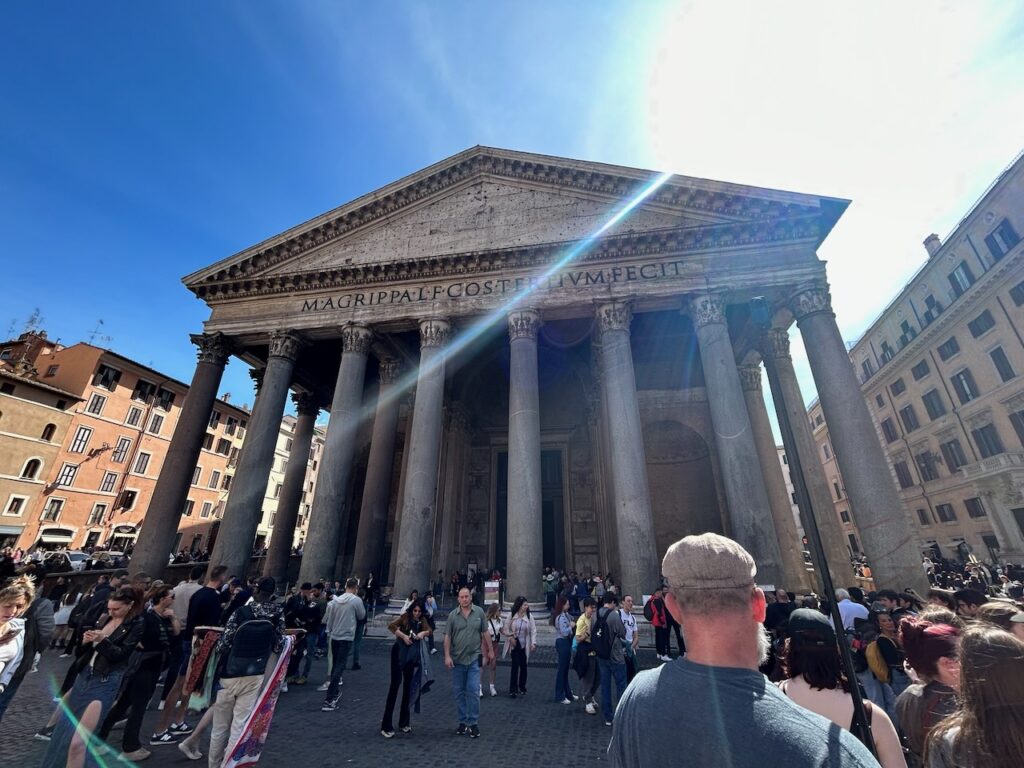
Photo of the Pantheon in Rome, showcasing its massive Corinthian columns and the Latin inscription on the pediment under a bright, clear sky. A large crowd of tourists gathers in the foreground in the Piazza della Rotonda.
It's important to manage your expectations for Rome -- there will be crowds.

Part of making a good decision is knowing what each city won’t give you.

Rome is large, loud, and relentless. If you want a slower, more intimate Italy, Rome can feel exhausting. It can have a higher density of tourists at the major sights than anywhere else in the country, which matters if crowds affect your experience. Seeing the Vatican or the Colosseum without advance planning in peak season means long lines and full tour groups.

Florence is smaller, which is mostly an asset — but it does mean you can cover the main sights faster than you expect. Some travelers arrive anticipating a week of discovery and find they’ve seen the major museums by day three. If you’re not interested in Tuscany day trips or slowing down significantly, Florence might feel like it runs out of obvious things to do sooner than Rome would.

Venice can feel touristy in a way that’s hard to escape in the most-visited areas. The restaurants near St. Mark’s Square and the Rialto are often overpriced and underwhelming. The city is also expensive relative to the rest of Italy for accommodation. None of this is disqualifying, but it does mean that getting a good experience in Venice requires more intentionality about where you stay, where you eat, and how you spend your time.

So, Which City Should You Choose?

If you’re still uncertain, here’s a simple way to think about it.

Choose Rome if ancient history is the reason you want to go to Italy, if you want the full scope of what Italy’s most iconic city offers, or if you’re comfortable navigating a large, busy city and want to hit the ground running.

Choose Florence if art and Renaissance culture are central to your trip, if you want a more manageable pace, if a base in Tuscany appeals to you, or if you’re a first-timer who wants an easier entry point into Italy.

Choose Venice if you want an experience that’s visually unlike anything else, if novelty and atmosphere matter more than a long list of sights, or if you’re traveling with kids who would respond well to a city on the water.

And if you’re wondering whether you have to choose at all — for most first-time trips of 10 days or more, seeing two of the three is realistic. Seeing all three is possible but requires accepting a faster pace. The 10-day itinerary guide goes deeper on how to think through that decision.

Ready to stop researching and start planning? I design custom Italy itineraries for couples and families — handling the research, bookings, and logistics so you can focus on the experience. Schedule a complimentary planning call and let’s figure out what your trip should look like.

Frequently Asked Questions

Is Rome or Florence better for first-time visitors to Italy?

It depends on your interests. Rome is the better choice if ancient history and scale are what you’re after. Florence works better if you want a more manageable pace, a focus on art and food, and easy access to the Tuscan countryside. Either city makes a strong anchor for a first Italy trip.
Yes, with realistic expectations. Venice is unlike any other city in the world, and most travelers find it memorable. It rewards slowing down and exploring beyond the main tourist areas. If you treat it as a two-day addition to a Rome or Florence itinerary rather than a standalone destination, it tends to deliver.
All three work, but for different reasons. Florence is the most logistically manageable. Rome offers the most dramatic historical experiences for kids. Venice surprises many families — the water-based transportation and car-free streets create a sense of adventure that younger travelers often respond to well.
Florence and Tuscany suit couples who want a mix of culture and quieter, more intimate moments. Rome works for couples who want the energy of a major city alongside its history and food scene. Venice earns its romantic reputation, especially outside peak season and away from the most crowded areas.
Sequence matters less than you might think. Most travelers find it more logical to move in one direction geographically — Rome to Florence to Venice, or the reverse — to avoid backtracking. But there’s no rule that says you have to see Rome first.
Florence. It’s compact, walkable, and straightforward to orient yourself in. Rome is manageable but larger and more complex. Venice is intentionally disorienting, though most travelers find getting lost part of the charm rather than a problem.

For a 10-day trip, two to three cities is the sweet spot. More than three and you spend more time moving between places than experiencing them. The 10-day Italy itinerary guide walks through how to think about this in detail.