How to Plan an Italy Trip with Teenagers: What Works and What Doesn't
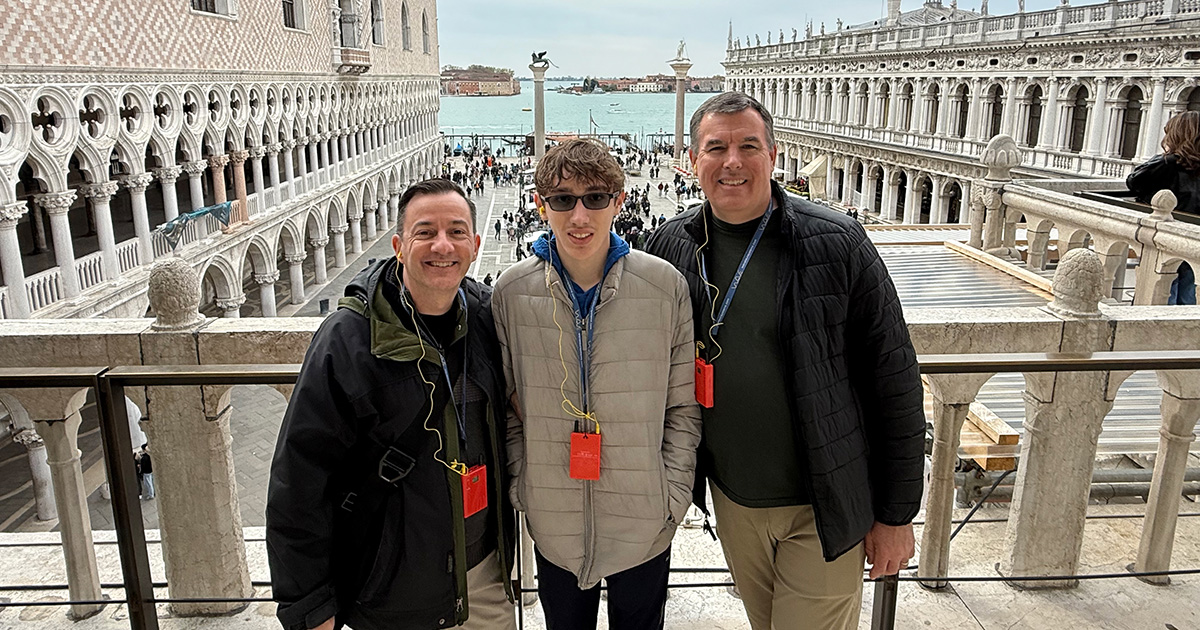
In this Italy trip with teenagers, a family of three smiles for a photo on a St. Mark's Square balcony in Venice.

Planning an Italy trip with teenagers works best when teens have some input on the itinerary, the daily pace includes built-in downtime, and city choices reflect their interests. Rome is the strongest starting point for most families. Two or three destinations over 10-14 days tends to work better than trying to cover more ground.

Italy is one of the best destinations in the world for teenagers, but only if it’s planned with them in mind. A trip built around adult priorities, packed with back-to-back museums, and short on downtime will lose a teenager fast. Plan it well, and Italy tends to surprise families: teens who expected to be bored often end up being the most engaged people in the group.

This guide is for parents planning an Italy trip with teenagers, whether your kids are fully in the teen years or you’re managing a mixed-age family where one child is 14 and another is 9. The planning principles are similar, but the execution requires some thought.

Why Italy Works for Teenagers (When It's Planned Right)

Italy has a lot working in its favor with teens. The food alone tends to win them over. The history is dramatic — gladiators, volcanic eruptions, Renaissance rivalries — rather than dry. Cities like Rome are walkable and visually engaging in a way that doesn’t require a museum ticket to appreciate. And unlike some destinations where teenagers feel like an afterthought, Italy has enough variety that there’s something for almost every kind of kid.

The problem isn’t Italy. The problem is usually the itinerary. Teenagers don’t respond well to a schedule that treats them like younger children, or like small adults who should be grateful to stand in line at the Uffizi for two hours. What works is an approach that respects their age, gives them some agency, and mixes cultural depth with enough breathing room that the trip doesn’t become something everyone is relieved to finish.

Involve Them Before You Go

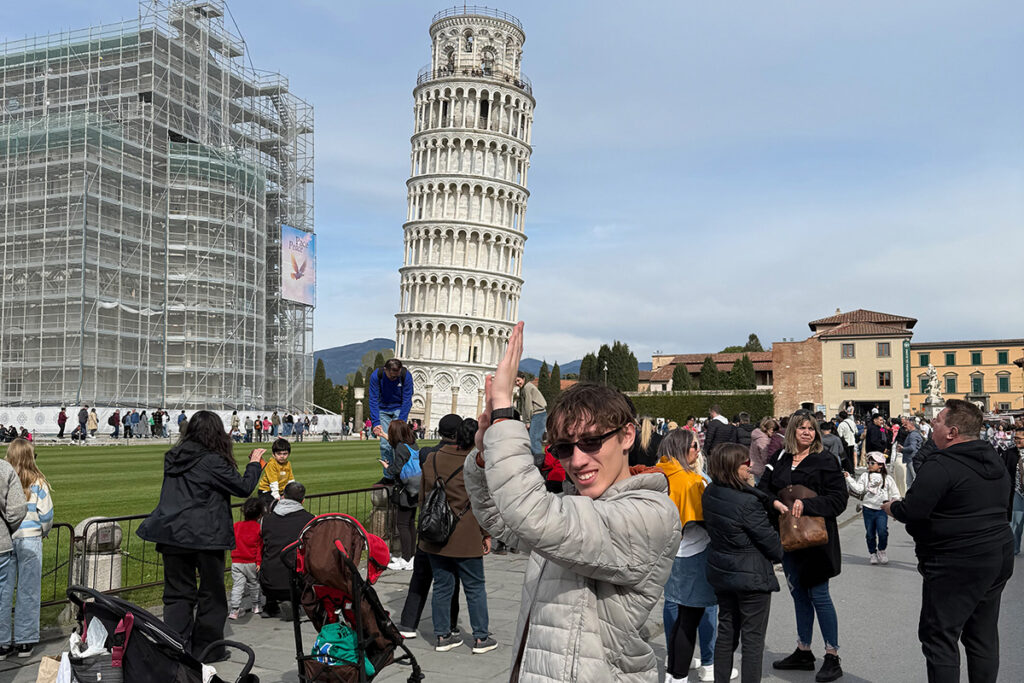
A young man in a gray jacket poses in front of the Leaning Tower of Pisa, holding his hands up to appear as if he is supporting the tilting structure.
Pisa wasn't originally part of my family's Italy travel plan, but it was one of the few things my son asked to do. Leaning Tower photo achievement unlocked!
One of the best things you can do before your trip is involve your teenager in the planning. This doesn’t mean handing over the itinerary. It means giving them real input on a few decisions that matter to them.

Ask them what they’re curious about. A teenager interested in food might want to take a cooking class. One who plays soccer might want to catch a Serie A match if the timing works. Another might have strong opinions about seeing Pompeii after studying ancient Rome in school. When teens have something on the itinerary they chose, they’re more invested in the trip overall, including the parts they didn’t choose.

The other benefit is practical: you find out early what they’re dreading. If your teenager has already decided the Vatican is going to be boring, you can either adjust your approach to that visit or have a direct conversation about expectations. Either way, you’re better off knowing before you land in Rome.

Choosing the Right Cities and Pacing

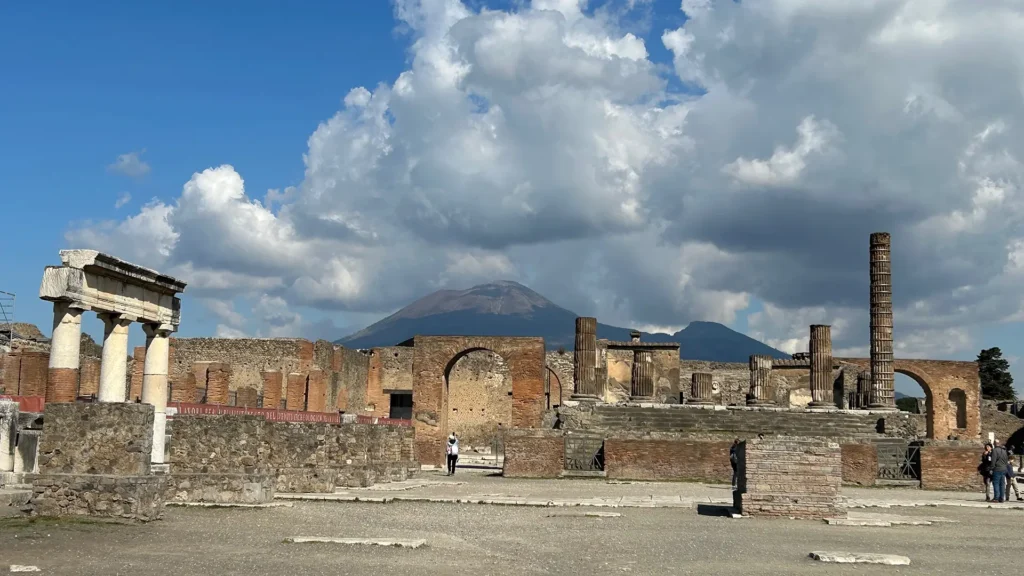
Planning a 10-day Italy itinerary with strategic destination choices, like Mount Vesuvius overlooking Pompeii
With a son who's fascinated by ancient civilizations, we could have spent a whole day exploring Pompeii.
Italy has no shortage of cities worth visiting, but not all of them land equally well with teenagers.

Rome tends to be the strongest starting point for families with teens. The scale of the Colosseum, the energy of the streets, the food — it’s hard to be indifferent to Rome. Florence works well for teens with an interest in art or history, though it can feel slower if your teenager isn’t particularly drawn to either. Venice is visually unlike anywhere else in the world, which tends to register even with reluctant travelers, but it’s harder to fill more than two days in for a teen audience. If your family enjoys being on the water or spends time at the beach at home, coastal areas like the Amalfi Coast and Sorrento, or lake destinations like Lake Garda, are worth building in. They provide a natural change of pace and tend to hold a teenager’s interest in a different way than city itineraries do.

On pacing: the most common mistake families make is trying to see too much. Three cities in ten days sounds reasonable until you’re spending three of those days in transit and recovery. Two cities with a day trip or two built in gives you more time to settle in, more flexibility when something runs long, and far less friction with teenagers who didn’t sleep well on the overnight flight.

A good rule of thumb is to plan no more than one major site per day. Build in an afternoon with no agenda at least every third day. Teenagers need unstructured time, not because they’re being difficult, but because everyone does, and teens feel the absence of it more acutely.

Keeping Teens Engaged at Historical Sites

The sites that work best with teenagers are the ones with a strong narrative and some physical scale. Pompeii tends to land well. It’s an open-air site, the story is immediately compelling, and there’s enough to explore that it doesn’t feel like standing in a room looking at things. The Colosseum works for similar reasons. Sites that are primarily collections of objects behind glass require more context and more patience.

The framing matters as much as the site itself. “We’re going to see Roman ruins” will get a different reaction than “We’re going to walk through a city that was buried alive in 79 AD and preserved almost exactly as it was.” Neither description is inaccurate — one just gives a teenager a reason to care.

Small-group or private tours designed for families, rather than standard audio guides or large group tours, make a real difference. A good guide reads the room and adjusts. They’ll pull teenagers into the conversation, ask them questions, and connect history to things that feel relevant. That’s hard to replicate with a headset and a recorded track.

Food Flexibility

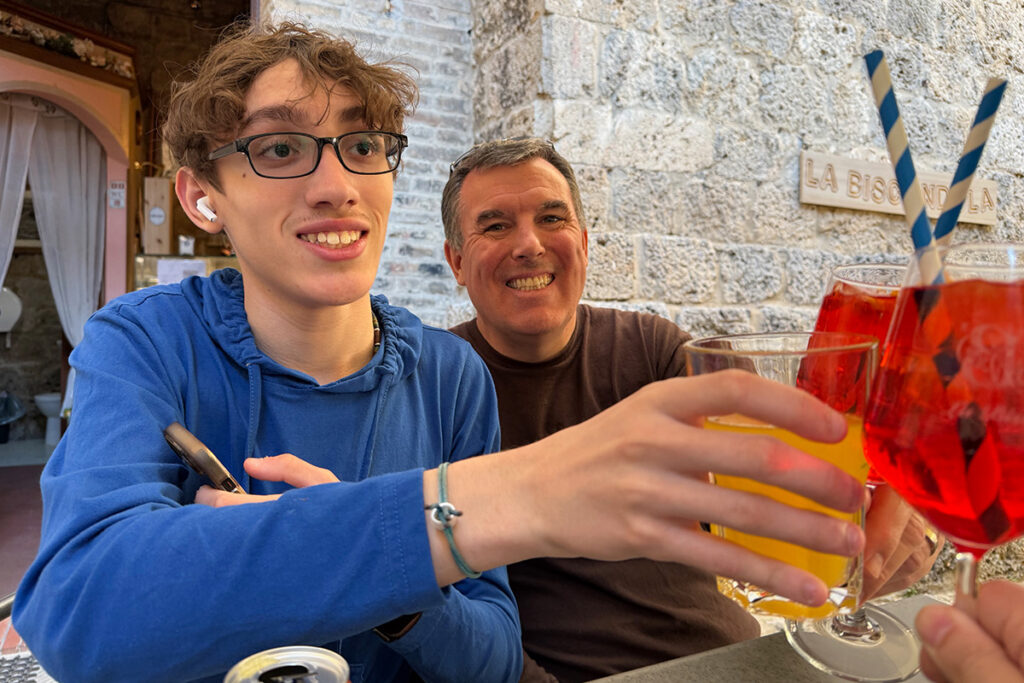
A smiling man and teenager toast with drinks, enjoying the aperitivo tradition at an outdoor cafe against a rustic stone wall in Italy.
Teens can enjoy the aperitivo tradition too! Who doesn't like a late-afternoon refreshing drink and snack?
Italy is one of the easier destinations for teenagers on food. Pizza and pasta are ubiquitous, the quality is high even at casual spots, and there’s enough variety that picky eaters can usually find something. Gelato helps with morale at every stage of the trip.

The bigger opportunity is using food as a cultural entry point. A market visit, a pasta-making class, or even just sitting down for a long lunch at a place with no English menu gives teenagers a different kind of engagement than another museum. Food tends to be less intimidating than art or history as a gateway into Italian culture, and the payoff is immediate.

Planning for Mixed-Age Families

If you’re traveling with a teenager and a younger child, the planning challenge is real but manageable. The key is building an itinerary that works for both ages without shortchanging either one.

Younger children need shorter days, earlier dinners, and more frequent breaks. Teenagers can handle longer days but need more independence within them — the ability to hang back, walk ahead, or have some say in what happens next. These aren’t incompatible if you’re intentional about it.

One approach that works well: give the teenager a defined role. They navigate for a morning, they pick the lunch spot, they lead the group through a site they researched. It’s a small thing that changes the dynamic considerably. For families navigating Italy across a wider age range, the Italy with Kids guide covers destination choices, pacing, and accommodation considerations that apply whether or not teenagers are in the mix.

What Doesn't Work: Common Planning Mistakes

Over-scheduling. An itinerary with something booked every morning and afternoon, back to back, will exhaust everyone and create conflict. Teenagers need room to breathe, and so do their parents.

Choosing cities and sites purely for adult appeal. A week in Florence and Tuscany might be exactly what you want. If your teenager has no particular interest in Renaissance art or wine country, you’ll need to work harder to keep them engaged. That’s not a reason to skip Florence — it’s a reason to build the itinerary more carefully and involve them in the conversation before you finalize anything.

Treating the trip as educational first, enjoyable second. Italy is genuinely educational, and that will come through without making it the explicit framing. Teenagers who feel like they’re on a school trip tend to disengage. The ones who feel like they’re on a family adventure tend to show up for it.

Frequently Asked Questions

What age is Italy good for?

Italy works well across a wide age range, but teenagers tend to get more out of the cultural and historical depth than younger children. That said, families travel Italy successfully with kids of all ages. The itinerary matters more than the age.

Ten to fourteen days is a reasonable range. It gives you enough time to cover two or three destinations without rushing, and enough downtime built in that the trip doesn’t feel exhausting. For a sample itinerary framework, the 10-day Italy itinerary guide is a useful reference.

Italy is generally a safe destination for families. The main practical considerations are standard urban awareness — pickpocketing in crowded tourist areas, keeping track of belongings — rather than serious safety concerns. Most families travel Italy without incident.
Rome is usually the strongest choice as a primary city for families with teens. It has scale, history, food, and enough variety to sustain several days. For families who want a beach or water component, the Amalfi Coast area and Lake Garda are worth considering alongside the major cities.
Choose selectively — not every museum needs to be on the itinerary. For the ones you do visit, context helps: give them something specific to look for, or book a guide who engages rather than lectures. Shorter, more focused visits tend to land better than trying to see everything.

How a Travel Advisor Can Help

Planning Italy with teenagers involves more moving parts than a standard adult trip. You’re balancing pacing across different ages, choosing experiences that hold a teenager’s attention, managing logistics across multiple cities, and trying to make sure everyone actually enjoys it.

A travel advisor who knows Italy well can help you make those calls before you book anything: which cities to prioritize given your family’s interests, which tour operators work well with teen and mixed-age groups, how to structure the days so the trip doesn’t collapse under its own ambition. The planning fee pays for itself when it keeps you from spending two days of a ten-day trip in the wrong place.

If you’re starting to think through an Italy trip with your family, scheduling a complimentary planning consultation is a great place to start.